| Return to Builders corner home | Tämä sivu suomeksi |
This aircraft is made to be simple to build and enjoyable to fly, both now and in the future. It uses existing power plants, and its energy system is set up to work with liquid biofuels as well.
General:
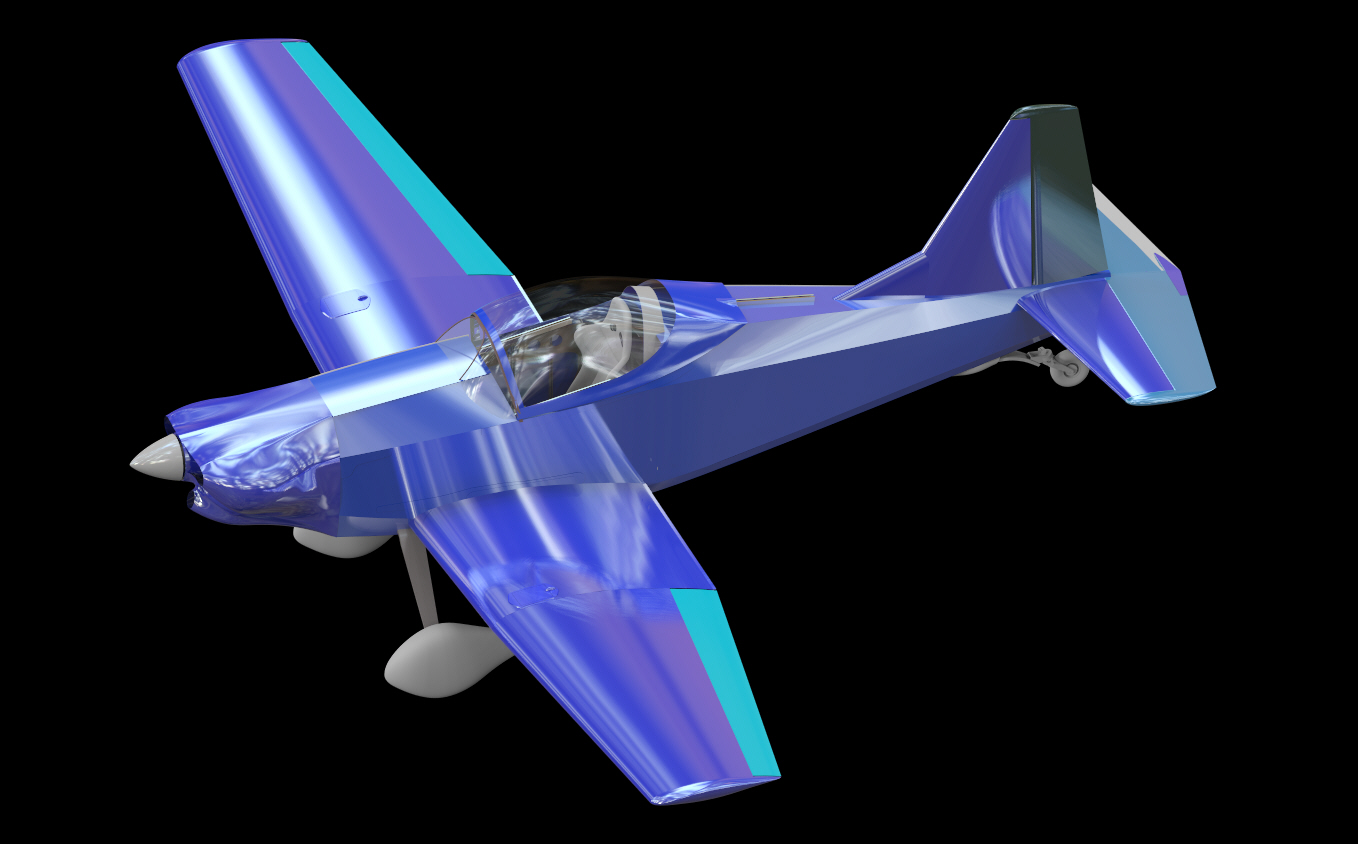
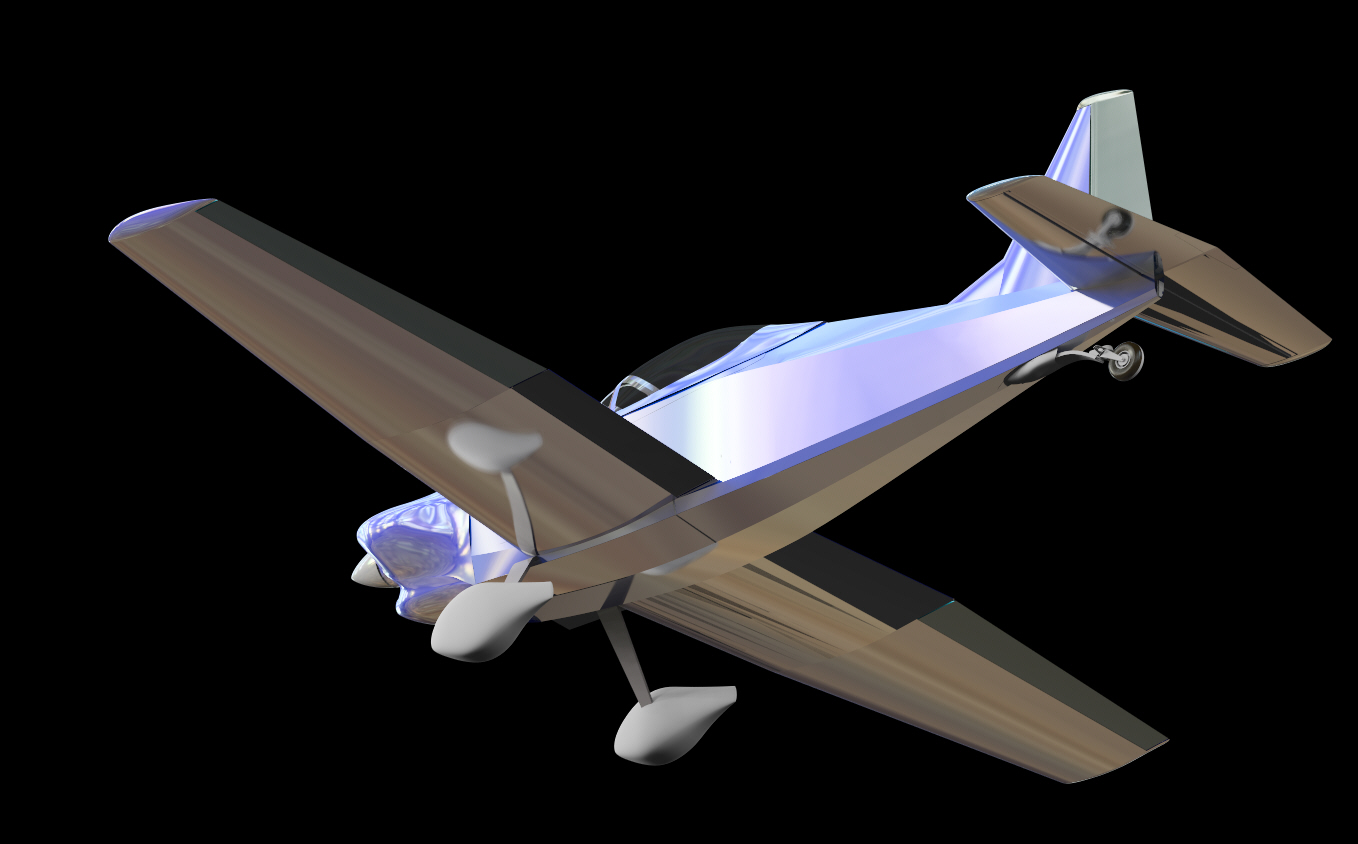
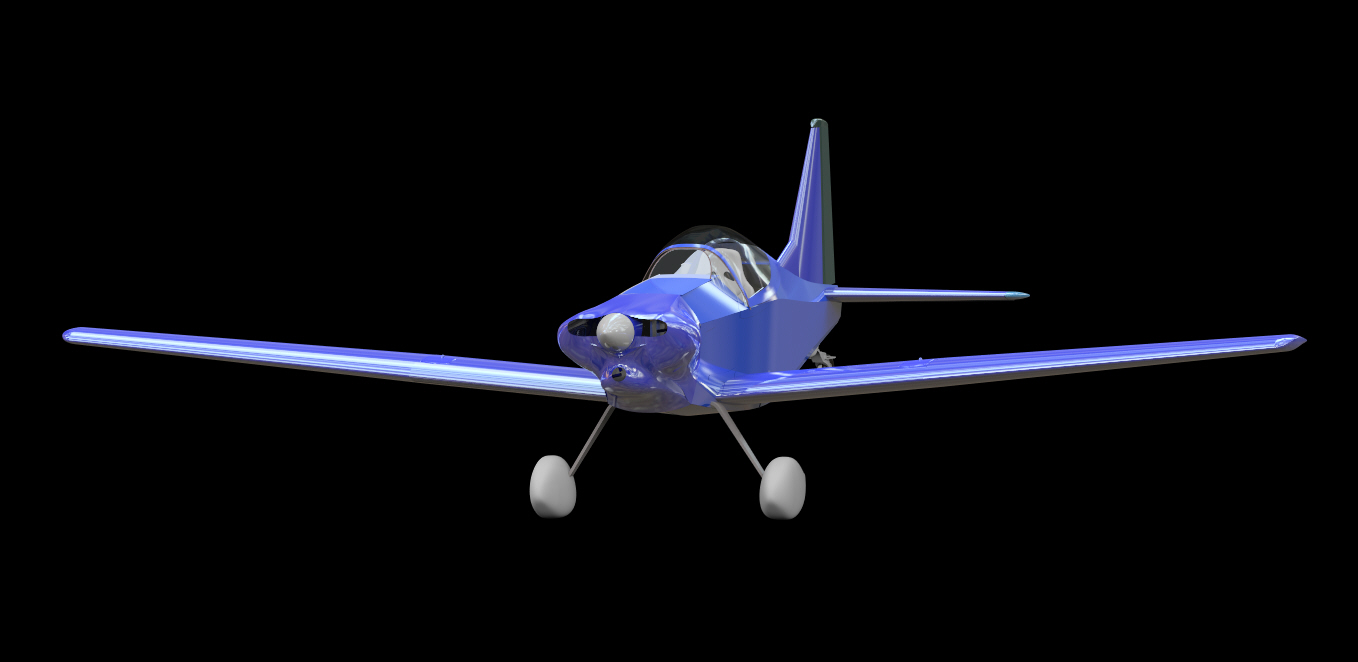
This is a single-seat, low-wing monoplane.
It uses fixed, conventional landing gear with a tailwheel.
The aircraft features a single-piece wing with a split landing flap.
It is powered by a single tractor engine.
Fuel tanks are located in the wing's leading edge, with an option to add external tanks.
Maximum takeoff weight selectable during building, 499 - 600 kg. / 1100 -1323 lbs
Detailled specification: see here.
Pretty picture 1, picture 2, picture 3, picture 4 (continental), picture 5 (rotax), picture 6 (ULpower)
Engine:
Piston engine: Continental A65, O-200D/AF, Rotax 912, UL260. Power range: 65 - 107 hp.
Structure
Fuselage:
The semi-monocoque structure uses plywood sandwich formers and bulkheads, with laminated wood longerons placed in the corners and a plywood skin. The frames are made with a water-jet cutter.
Wing:
The wing uses a semi-monocoque structure with plywood ribs, carbon or wood spars and webs, and a plywood skin. The ribs are made with a water-jet cutter. The wing can be removed while the aircraft is on its landing gear, which makes maintenance and repairs easier.
100% mass balanced ailerons, frames plywood sandwich, laminated wood stringers. Fabric covered.
Horizontal tail:
The stabilizer uses a semi-monocoque structure with plywood sandwich frames, laminated wood stringers in the corners, and a plywood skin. The elevator is fully mass-balanced and built with plywood sandwich frames and laminated wood stringers. It is covered with fabric, and the horizontal stabilizer can be removed.
Vertical tail:
The stabilizer uses a semi-monocoque structure with plywood sandwich frames, laminated wood stringers in the corners, and a plywood skin. The rudder is fully mass balanced and built with frames, plywood sandwich, and laminated wood stringers. It is covered with fabric. The vertical stabilizer is integrated into the fuselage.
Cockpit:
Seat
Fixed seat with three fixing positions (fore/aft) attachment for FIA approved "car race-seat". Four or five point seat belts. Seat and belts are fixed to safety cage, which forms strong structure for central part of fuselage.
Control stick
Control stick is without adjustments. Cable control for elevator and pushrods for ailerons.
Rudder pedals
Adjustable longitudinal position. Toe brakes for main wheels. Cable control to rudder.
Canopy
Two styles to choose from. A single piece which is hinged to open to side. A two piece design with fixed windscreen and sliding (to back) canopy.
Bought in parts
The structure is built to use ready-made parts wherever possible.
Obvious
All homebuilt aircraft use these purchased parts. Many people may not realize how easy it is to buy these items or semi-finished products. Examples include the engine, propeller, sheet material, screws, bolts, nuts, cables, instruments, safety belts, paints, wheels, rims, and tail wheel.
Not so obvious
Fuel tank, seat, landing gear spring.